
You served, you adapted, and you pushed through. But now, years after returning home, your body still feels like it’s bracing for impact. The tension in your shoulders won’t release. Your sleep is broken. Your back aches for no clear reason. What’s happening isn’t weakness. It’s your nervous system doing exactly what it was trained to do. One to One Wellness in Halifax takes that reality seriously, looking at your full history rather than just your symptoms. Our team’s interdisciplinary care for veterans is built around exactly this kind of complexity.
Trauma and chronic stress can rewire how your body processes pain, and for many veterans, that connection goes unaddressed for years. The good news is that veteran pain management in Halifax can take a more complete approach, one that looks at your body and your history together.
Below, we’ll look at how trauma and stress shape physical pain, what nervous system regulation actually involves, and the veteran-specific programs One to One offers to help you move forward.
How Trauma & Stress Show Up as Physical Pain
The Link Between Your Nervous System & Pain
When you experience repeated stress or trauma, your nervous system shifts into a state of high alert. It becomes very good at detecting threats and sending pain signals to protect you. The problem is that it doesn’t always know when the threat is gone. Learning how pain actually works can help make sense of why your body keeps responding this way.
Chronic stress keeps that alarm system running even when you’re safe at home. Over time, this can amplify pain signals throughout your body, making normal sensations feel sharp, heavy, or exhausting. Your muscles hold tension like a clenched fist, long after there’s nothing left to brace against.
Signs Your Nervous System May Be Dysregulated
A dysregulated nervous system doesn’t always announce itself clearly. Sometimes it shows up as pain you can’t explain or symptoms that don’t respond to standard treatments. Some things to watch for include:
- Persistent muscle tension, headaches, or back pain that lingers without a clear physical cause
- Sleep disruption and fatigue that don’t improve no matter how much rest you get
- Heightened sensitivity to touch, sound, or movement that feels out of proportion
These aren’t random complaints. They’re signals worth paying attention to. The way your brain responds to pain explains a lot about why these signals can persist long after an original injury or stressor is gone.
Why Veterans Face Unique Pain Management Challenges
Military service asks a lot of your body and your mind, often at the same time. Repeated physical strain, exposure to high-stress environments, and psychological pressure don’t stay in separate boxes. They layer on top of each other, and over time, that layering becomes hard to untangle.
One of the biggest gaps in pain care for veterans is that physical pain and trauma history are often treated separately, or one is ignored entirely. A standard approach might address your back pain without ever considering how your nervous system has been shaped by years of high-alert living. That missing piece can make it feel like your treatment is only working halfway. For veterans navigating both PTSD and chronic pain together, this gap is especially common.
Standard pain management also tends to focus on one provider, one discipline, and one problem at a time. For veterans carrying complex physical and psychological histories, that approach often falls short. One to One’s year-long veterans’ pain management program was built for exactly that complexity, combining multiple disciplines into a single coordinated plan.
Veteran-Specific Programs at One to One Wellness
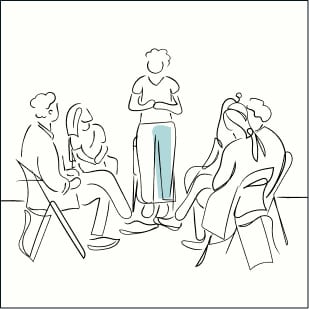
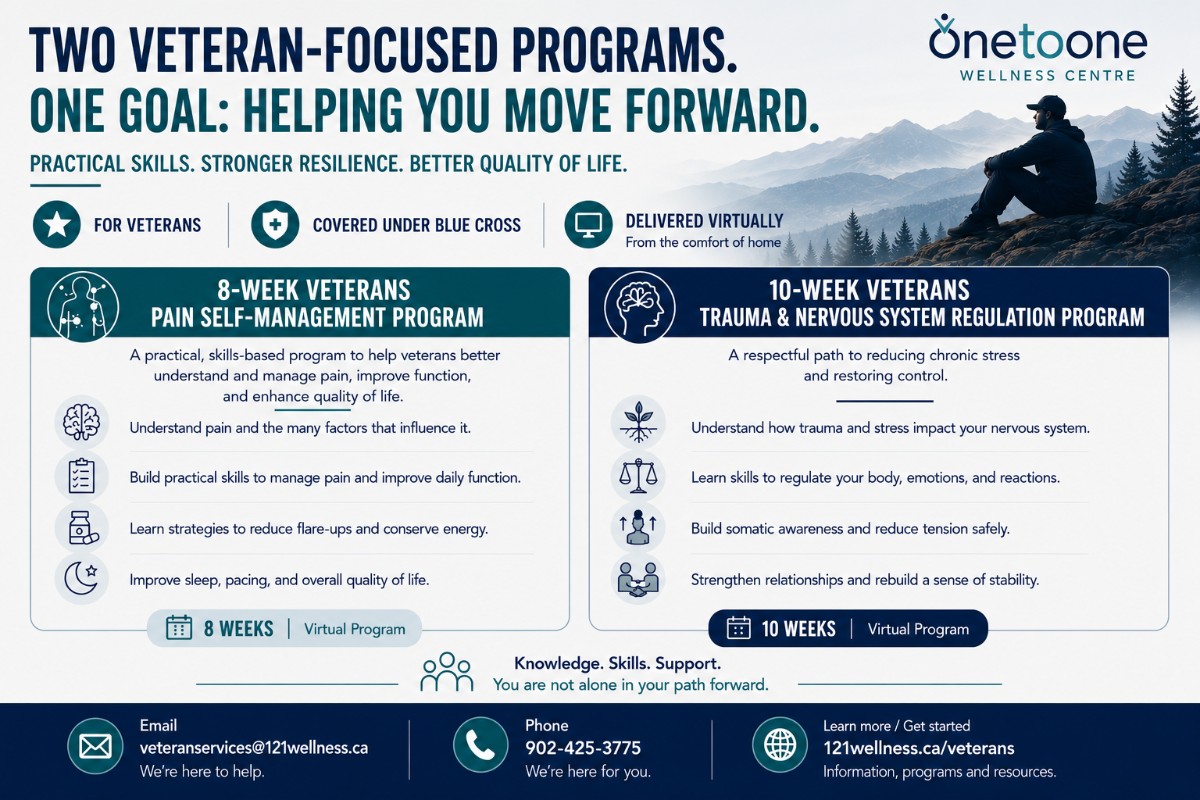
Understanding how trauma and pain are connected is one thing. Having a structured, supportive way to work through it is another. One to One offers two veteran-focused programs designed to meet you where you are, both delivered virtually and covered under Blue Cross, so you can take part from the comfort of home.
The 10-Week Trauma & Nervous System Regulation Program
This program offers a respectful path toward reducing chronic stress and restoring a sense of control. Rather than asking you to revisit the past in detail, it focuses on understanding how trauma and stress affect your nervous system, and on building practical skills to regulate your body, emotions, and reactions.
Over ten weeks, you’ll work on developing somatic awareness, easing tension safely, and strengthening the relationships and sense of stability that support long-term well-being. It’s built for veterans who want to feel more grounded in their own bodies again, at a pace that respects what they’ve been through.
The 8-Week Pain Self-Management Program
For veterans whose primary focus is chronic pain, this practical, skills-based program helps you better understand and manage pain, improve daily function, and enhance quality of life. Over eight weeks, you’ll learn how pain works and the many factors that influence it, build practical strategies to reduce flare-ups and conserve energy, and work toward better sleep, pacing, and overall comfort. It’s a focused way to gain tools you can keep using long after the program ends.
Both programs reflect the same idea behind everything One to One does for veterans: knowledge, skills, and support, with the understanding that you are not alone in your path forward.
To learn more or register, reach out to the veteran services team at veteranservices@121wellness.ca or call 902-425-3775, or visit 121wellness.ca/veterans for program details and resources.
A Collaborative Approach to Pain Management in Halifax
What a Multidisciplinary Care Team Looks Like
A multi-disciplinary team brings together different types of care providers. Physiotherapists, psychologists, massage therapists, osteopathic manual therapists, occupational therapists, and nurse practitioners work alongside each other rather than in separate silos. Each provider contributes a different layer of insight into what’s driving your pain. You can learn more about the full range of rehabilitation services available to understand how each discipline fits into your overall care.
At One to One Wellness in Halifax, that collaborative model means your care team shares information and coordinates around your full picture of health. Your care plan isn’t static. It adjusts based on how your body and mind actually respond over time.

Why Collaboration Matters for Chronic Pain
When physical and psychological factors are treated at the same time, progress tends to be more consistent. You’re not bouncing between providers who don’t know what the others are doing. Instead, the team moves together with a shared understanding of where you are and what you need next.
No single provider carries the full weight of your care, and that matters. It means the approach stays flexible and thorough, rather than narrowing to one solution that may not address everything at play.
Tools & Therapies That Support Nervous System Regulation
Body-Based Approaches
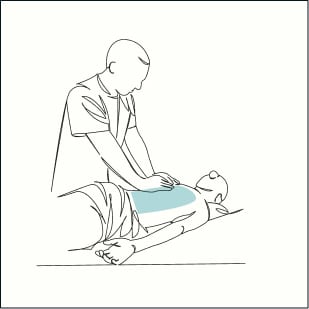
Massage therapy can help release the physical tension your body has been storing. Think of it as giving your muscles permission to stop bracing. Physiotherapy works alongside that by restoring movement patterns and reducing how sensitive your nervous system is to pain.
Osteopathic manual therapy is another body-based option that works with how your body’s systems connect and communicate. These approaches treat your body as one interconnected system, not just a collection of separate complaints.
Mind-Body Support
Psychology addresses the trauma responses that feed into your pain experience. When your nervous system has learned to stay on high alert, working through that pattern with a psychologist can make a real difference in how pain feels day to day.
Occupational therapy helps you rebuild daily function and routine in a way that works with your current capacity, not against it. Getting back to meaningful activity at a pace that makes sense for your body is a meaningful part of long-term pain management.
Supporting a Veteran in Your Life
Sometimes the person who notices the struggle first isn’t the veteran. It’s a partner who sees the sleepless nights, a grown child who notices the withdrawal, or a friend who can tell something hasn’t been right for a long time. If you’re reading this for someone you care about, that instinct to help matters.
Supporting a veteran through chronic pain and trauma doesn’t mean having all the answers. Often the most meaningful thing you can do is listen without trying to fix, and gently let them know that what they’re experiencing is real and worth taking seriously. You don’t need to push. Simply opening the door to a conversation, and letting them move through it at their own pace, can make a difference.
It can also help to know that practical support exists. Both veteran programs at One to One Wellness are delivered virtually and covered under Blue Cross, which removes some of the common barriers to getting started. If it feels right, you’re welcome to reach out to the veteran services team yourself to learn more about the options, so you can share what you find when the moment is right.
Whatever the path forward looks like, no one has to navigate it alone, veterans and the people who care about them included.
What to Expect from Pain Management in Halifax
Your first steps with a multidisciplinary team involve a thorough assessment. Different providers take the time to understand your history, your current symptoms, and what matters most to your daily life. That foundation shapes everything that follows. Our physician and nurse practitioner services available at the practice also support medication management and diagnostics as part of that foundation.
Progress is measured in real, functional ways. How well you’re sleeping, how much you can move without pain, and how your days feel are the markers that matter. The goal isn’t a number on a form but a life that feels more manageable. For veterans dealing with sleep disruption alongside chronic pain, sleep medicine support can be a meaningful part of that recovery.
The care plan changes as you do. If something isn’t working, the team adjusts. If you reach a new goal, the next step gets mapped out with you. Your care stays responsive to where you actually are, not where the plan assumed you’d be.
Start Your Path Forward
If chronic pain and the weight of past stress have been wearing you down, and it feels like nothing has addressed the whole picture, One to One Wellness in Halifax is here to help. Our veteran programs are built to work with your full experience, not just part of it, and to meet you at a pace that respects what you’ve been through.
Whether you’re a veteran ready to take the first step or someone supporting one, you can learn more or register by reaching the veteran services team at veteranservices@121wellness.ca, calling 902-425-3775, or visiting 121wellness.ca/veterans.